
NEWS
Religious Freedom Concerns Emerge in South Korea
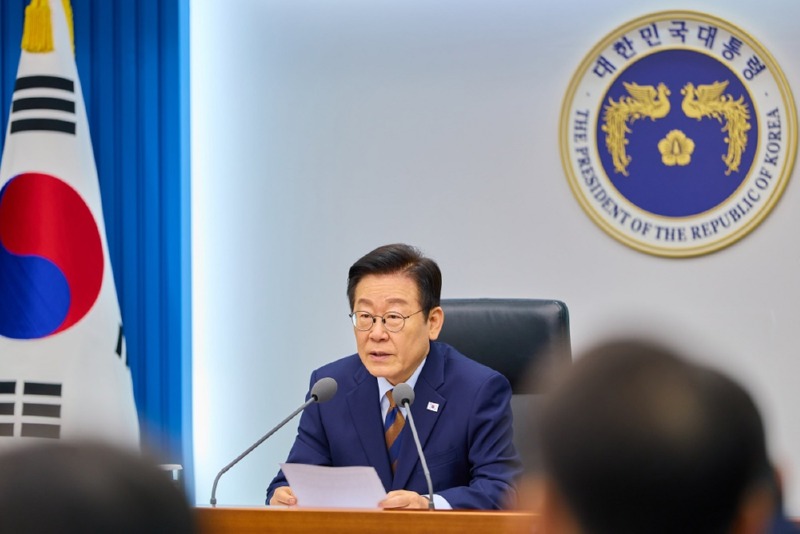
Growing criticism is being directed at the South Korean government following public statements by senior officials targeting a specific religious group, raising concerns about religious freedom, democratic norms and state overreach.
The controversy follows remarks by President Lee Jae Myung and Prime Minister Kim Min-seok, who publicly labelled Shincheonji Church of Jesus, the Temple of the Tabernacle of the Testimony, as a “cult” and called for its investigation and “eradication.” The statements have prompted allegations of religious persecution and renewed international scrutiny of South Korea’s democratic credentials.
Observers note an emerging contrast between South Korea’s global image as a cultural powerhouse driven by K-pop and K-drama, and growing concerns that the country may be showing signs of democratic regression.
South Korean President and Prime Minister Label Religious Group a “Cult,” Call for “Eradication,” Drawing Criticism
On 12 January, President Lee Jae Myung publicly condemned Shincheonji and other religious groups, stating that the “harm they cause to society has been left unchecked for too long, resulting in serious damage.” A day later, Prime Minister Kim Min-seok echoed the president’s remarks during a cabinet meeting, ordering a joint investigation into what he described as a “pseudo-religious group” with the goal of its eradication.
Following the directive, a joint law enforcement task team was established, and investigations are reportedly under way. Discussions in the National Assembly regarding the possible appointment of a special prosecutor have further raised concerns about additional compulsory measures, including potential search-and-seizure operations.
Article 20 of South Korea’s Constitution guarantees freedom of religion. Legal experts and civil society groups argue that public statements by the executive branch, made in the absence of judicial rulings, risk fostering stigma and hostility toward a specific religious community.
Critics further note that President Lee’s election followed the impeachment of his predecessor after an unconstitutional declaration of martial law, heightening sensitivities around the separation of powers and respect for constitutional safeguards.
Shincheonji Responds: “Repeated Targeted Investigations Amount to Religious Discrimination”
Founded in 1984 by Chairman Lee Man-hee, Shincheonji Church of Jesus is a rapidly growing Christian movement that reports annual membership growth exceeding 100,000. Analysts suggest the group’s expansion and visibility may have contributed to heightened political and social scrutiny.
The church became a major focus of government action during the COVID-19 outbreak in 2020, when authorities launched extensive investigations into alleged violations of infectious disease laws.
Shincheonji reports that more than ten search-and-seizure operations were conducted at its headquarters and branch churches during that period.
President Lee, then serving as governor of Gyeonggi Province, adopted a hardline stance and personally led a forced entry into the church’s headquarters.
Subsequently, South Korean courts acquitted Shincheonji of major charges, including alleged violations of the Infectious Disease Control and Prevention Act. In a statement, the church said that “although numerous complaints and accusations have been filed against us, courts have consistently dropped charges or ruled ‘not guilty.’” It added that issues already resolved by the judiciary are now being recycled for political and public attacks.
Shincheonji maintains that it has no intention of engaging in political conflict and has urged authorities to stop using a specific religion as a scapegoat while calling for national unity.
International Scrutiny Intensifies as President Trump and Democracy Advocacy Groups Voice Concern
International scrutiny intensified after U.S. President Donald Trump publicly referenced alleged raids on churches in South Korea during an August 2025 summit. In a subsequent post on Truth Social, Trump described the actions as “very vicious raids” and suggested that a “purge or a revolution” could be under way in the country.
Diplomatic analysts note that it is highly unusual for the leader of an allied nation to openly question another country’s internal law enforcement practices.
In December, the International Democracy Union (IDU) issued a statement indicating that South Korea should be monitored for adherence to core democratic principles and the protection of fundamental rights. Such resolutions concerning South Korea are rare, particularly on matters related to governance and the rule of law.
Freedom of religion is protected under the International Covenant on Civil and Political Rights (ICCPR), to which South Korea is a signatory. International legal standards require that any state interference with religious practice meet strict tests of legality, proportionality and necessity.
As investigations continue, the situation raises broader questions for liberal democracies about the limits of state intervention in religious affairs. For South Korea, the outcome may shape both its domestic democratic landscape and its international standing in the years ahead.